Need for Information

What is acidification

Ocean Acidification (OA) is a pressing environmental concern that affects the health of our oceans and the people who use them.

Overview

Why It Matters

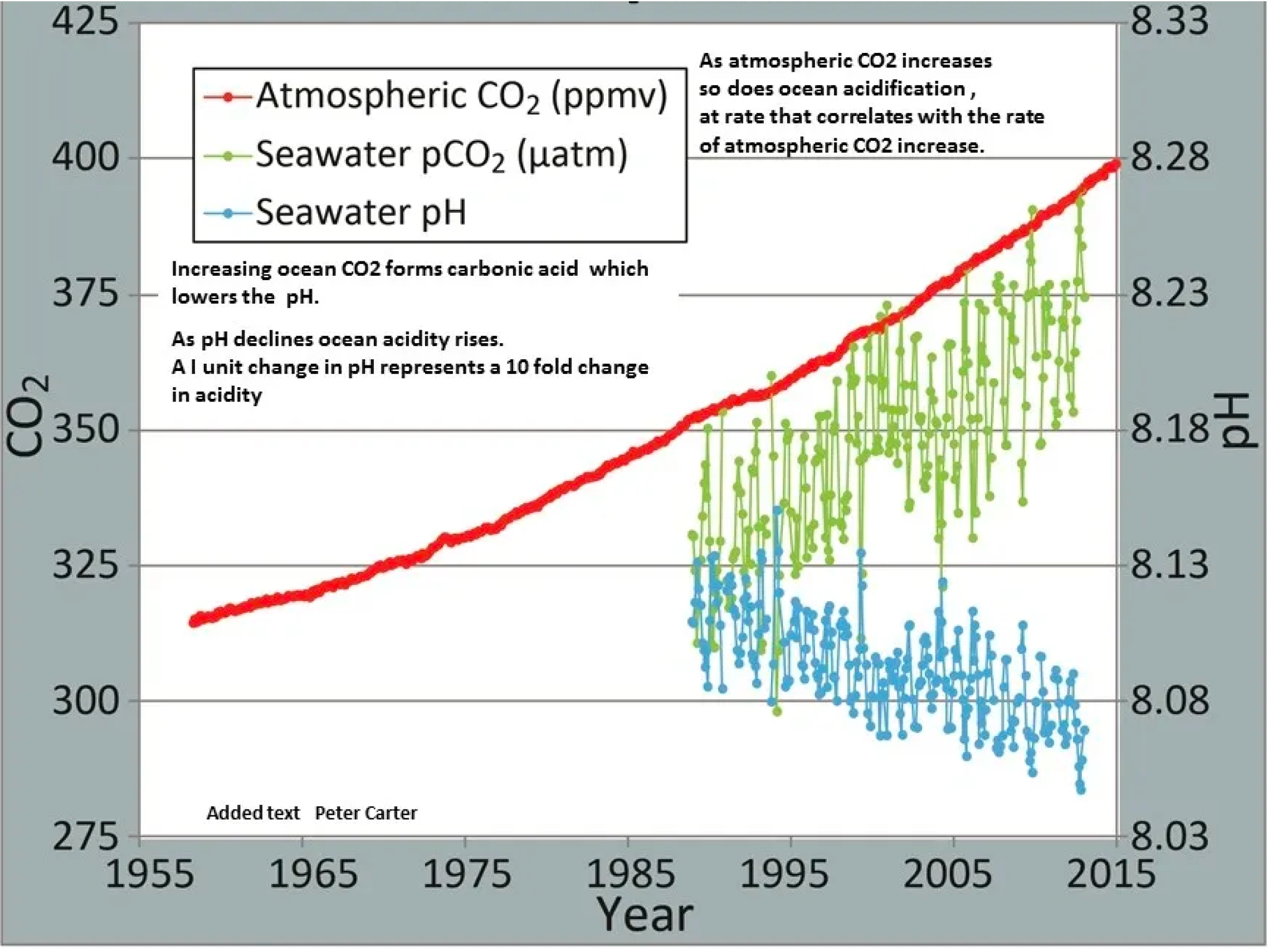
Carbon dioxide gas dissolves so readily in seawater that approximately one quarter of human caused CO₂ emissions become sequestered in the ocean. Once in the ocean, CO₂ combines with water to form a weak acid, resulting in a change in the chemistry of the sea.

The Chemistry of Ocean Acidification

The other major change in seawater chemistry involves CO₂-driven changes in the solubility of calcium carbonate minerals (CaCO₃) used by many marine plants and animals to build their shells and skeletons.rnrnThe solubility of CaCO₃ minerals depend on the amount of dissolved carbonate ions in seawater.rnrnMore CO₂ and lower pH reduces the concentration of carbonate ions, making it more difficult for many organisms to make shell material.

Ocean CO₂ and pH from NOAA: Correlation between rising levels of CO2 in the atmosphere at Mauna Loa with rising CO₂ levels in ocean at Station Aloha. As the CO₂ increases, the pH decreases; indicating increasing acidificication.

Ocean Acidification Threatens Shellfish Industries: Impacts on Wild Shellfish, Aquaculture, and Hatcheries

Case Study: Whiskey Creek Shellfish Hatchery
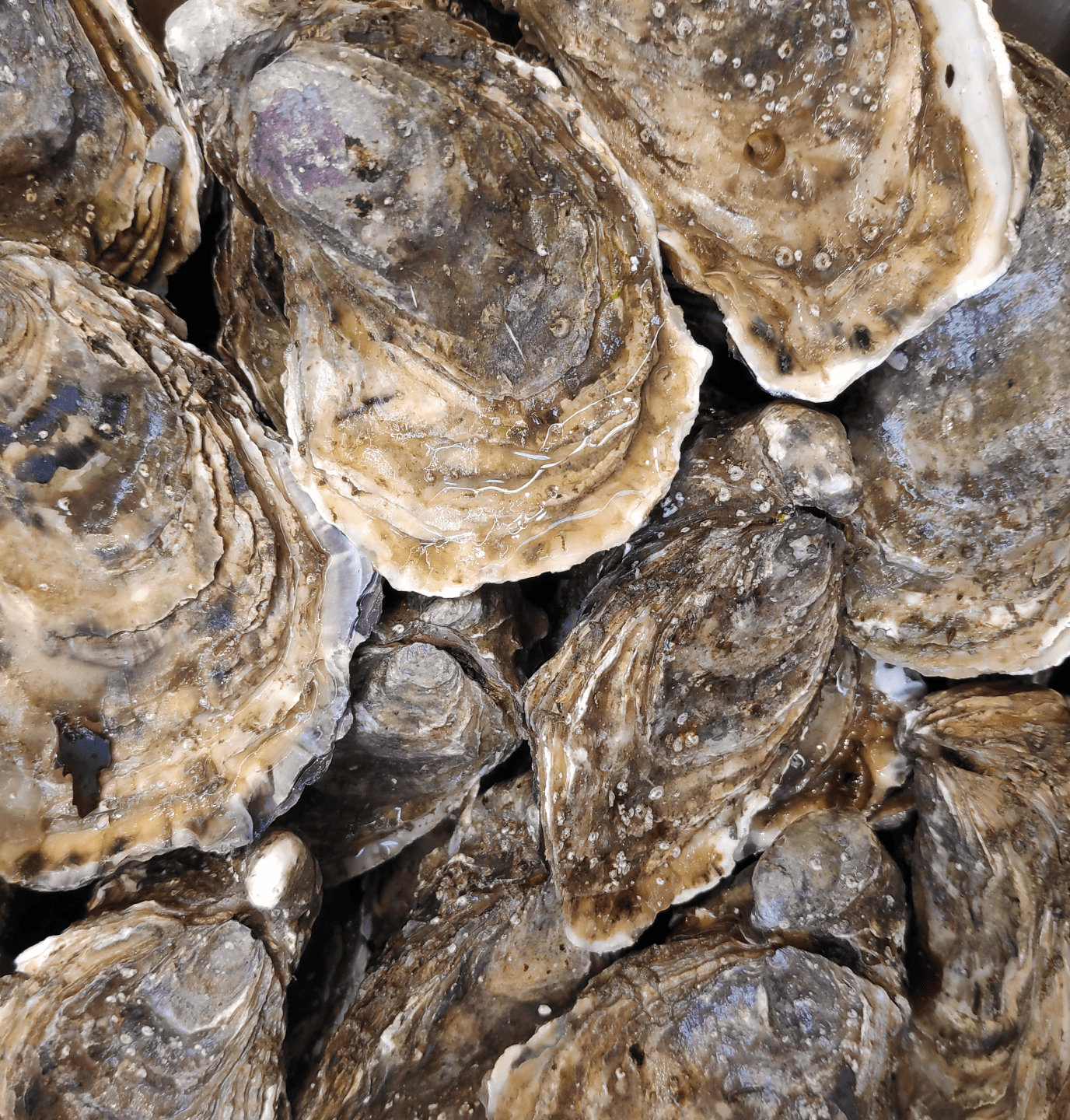
In 2007, the Whiskey Creek Shellfish Hatchery in Oregon experienced a massive die-off due to acidified conditions. Without access to healthy oyster seed, many shellfish growers were devastated for years. More acidified conditions cause adult shellfish to have weaker and thinner shells, making them more susceptible to predators and diseases. Hatcheries in the Gulf of Maine and the Mid-Atlantic are working with researchers to watch for changes and ward off massive die-offs like the one experienced at the Whiskey Creek Shellfish Hatchery.

Perspectives from the Commercial Shellfish Industry Webinar

These Effects Can Have Serious Economic Consequences

Collaborating with Industry Representatives and Resource Managers to Reduce Acidification Impacts
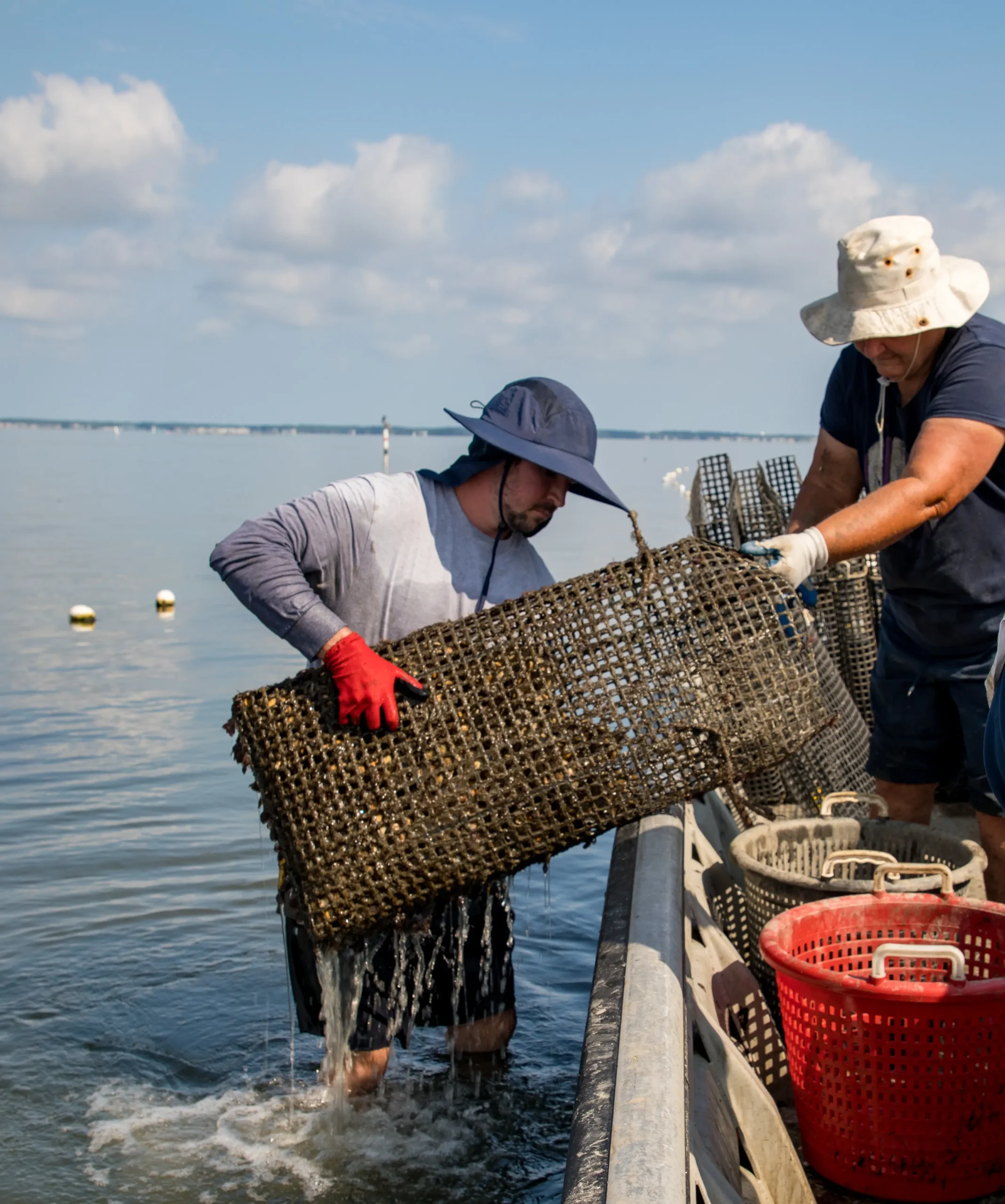
Working together with industry and resource managers, we can combine scientific expertise, real world experience, and resources to get results.

Similar collaborations in the Pacific Northwest have successfully passed new legislation, received funding, and acquired new data for acidification reduction efforts.

Mid-Atlantic research indicates there are reasons to be concerned about acidification and that the ocean chemistry is continuing to change, but we are still assessing the level of impact to be expected in this region and what that will mean for its coastal communities.

Photo: Susan McClean/Aquaculture

References

EK Towle, AC Baker, C Langdon. 2016. Preconditioning to high CO2 exacerbates the response of the Caribbean branching coral Poritesporites to high temperature stress. Marine Ecology Progress Series; 546: 75-84. DOI: 10.3354/meps11655. https://doi.org/10.3354/meps11655

E Ramirez-Llodra, PA Tyler, MC Baker, OA Bergstad, MR Clark, E Escobar, LA Levin, L Menot, AA Rowden, CR Smith, CL Van Dover. 2011. Man and the last great wilderness: human impact on the deep sea. PLoS ONE 6(8): e22588. https://doi.org/10.1371/journal.pone.0022588

RC Chambers, AC Candelmo, EA Habeck, ME Poach, D Wieczorek, KR Cooper, CE Greenfield, and BA Phelan. 2014. Effects of elevated CO2 in the early life stages of summer flounder, Paralichthys dentatus, and potential consequences of ocean acidification. Biogeosciences 11.6: 1613-1626. https://doi.org/10.5194/bg-11-1613-2014 

GG Waldbusser, EP Voigt, H Bergschneider, MA Green, RIE Newell. 2011. Biocalcification in the eastern oyster (Crassostrea virginica) in relation to long-term trends in Chesapeake Bay pH. Estuaries and Coasts 34.2: 221-231. https://doi.org/10.1007/s12237-010-9307-0

E Ramirez-Llodra, PA Tyler, MC Baker, OA Bergstad, MR Clark, E Escobar, LA Levin, L Menot, AA Rowden, CR Smith, CL Van Dover. 2011. Man and the last great wilderness: human impact on the deep sea. PLoS ONE 6(8): e22588.

Ekstrom, J. A., Suatoni, L., Cooley, S. R., Pendleton, L. H., Waldbusser, G. G., Cinner, J. E., Ritter, J., Langdon, C., Van Hooidonk, R., Gledhill, D., Wellman, K., Beck, M. W., Brander, L. M., Rittschof, D., Doherty, C., Edwards, P. E. T., & Portela, R. (2015). Vulnerability and adaptation of US shellfisheries to ocean acidification. Nature Climate Change, 5(3), 207–214. https://doi.org/10.1038/nclimate2508

Speir, C., Ryan, G., & Mayo, C. (2016). Fisheries Economics of the United States, 2014 (NOAA Technical Memorandum, p. 246). NOAA. https://spo.nmfs.noaa.gov/sites/default/files/TM163.pdf

Wang, Z. A., Wanninkhof, R., Cai, W.-J., Byrne, R. H., Hu, X., PenSabag, T.-H., & Huang, W.-J. (2013). The marine inorganic carbon system along the Gulf of Mexico and Atlantic coasts of the United States: Insights from a transregional coastal carbon study. Limnology and Oceanography, 58(1), 325–342. https://doi.org/10.4319/lo.2013.58.1.0325